Feature
IMPRESSION
Fall 2026
What actually goes inside the document that keeps a growing company looking like one company.

Rod Pancine

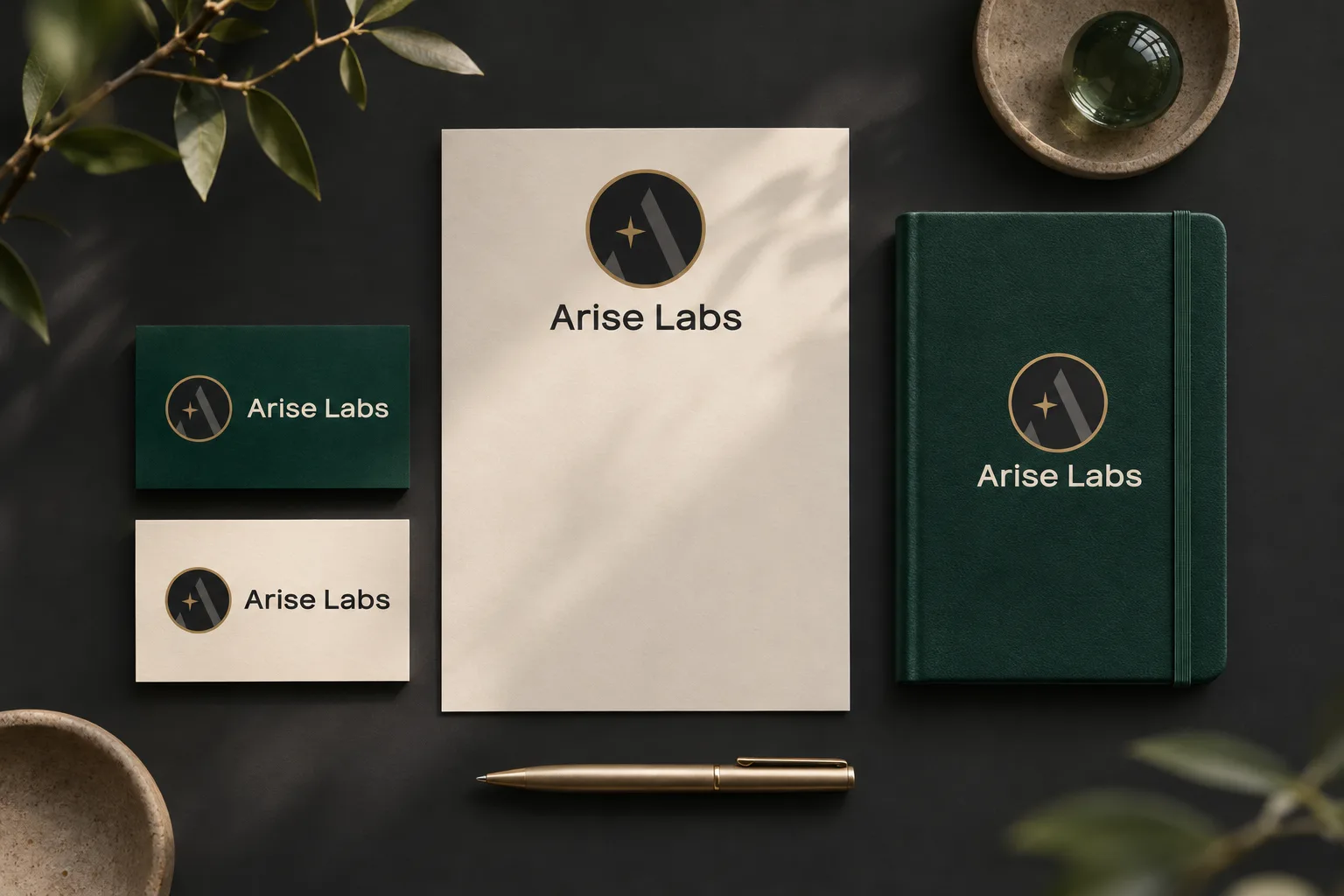
A Brand Foundations guide is not a mood board and it is not a style guide in the old, static sense. It is a working reference, built to be opened by a designer, a new hire and a print vendor alike, and understood by all three. Here is what we build into every one, using the Arise Labs guide as the template.
"The best compliment a Brand Foundations guide gets is that nobody talks about it. It just quietly makes every new piece of work look like it belongs."
A guide of this depth typically runs several weeks from the first language workshop to final delivery, longer for companies with more stakeholders or more existing material to reconcile. The pace is set by how quickly a leadership team can agree on the language stage, not by the design work, which is usually the fastest part of the whole process.
One person, always. Usually marketing, sometimes the founder directly for smaller teams. That person becomes the person every "can we use this colour" or "does this photo feel on brand" question goes to, which is the entire point: a brand foundation only works if someone is responsible for defending it.
Treating the guide as finished rather than living. A brand foundation should get revisited once a year, not rewritten, just checked. New products, new markets and new hires all put pressure on a system that was built for the company as it existed the day the guide shipped. A short annual review, an hour, not a project, keeps the guide accurate instead of aspirational.
Written by
Rod Pancine
Designer x Developer
Designs and builds our websites and brand identities, from the first sketch to launch day. Fluent in pixels and fussy about alignment.
+