Our Wins
IMPRESSION
Fall 2025
Inside the campaign that turned Alzheimer Calgary's Walk and Run into the content their team always dreamed of having.

John Biglete
Alzheimer Calgary's Walk and Run is the kind of event that means everything to the people in it and very little to everyone else, unless someone gives them a reason to look. Every year the event needs to do two jobs at once: raise real money for programs and support groups across the city, and make strangers care enough to register, show up, or simply share a post. Neither job happens by accident. Both take a campaign built the way any serious brand campaign is built, with a strategy, a shoot list, and a plan for where the content actually lives once it is made.
Before a single frame gets shot, our team sits down with the Alzheimer Calgary staff to talk about the people behind the event: the families, the volunteers, the support group facilitators, the ambassadors who put their own story forward to bring others in. That conversation shapes everything downstream. It is the difference between a generic charity-walk post and a piece of content that stops someone mid-scroll because they recognise a feeling, not just an event.
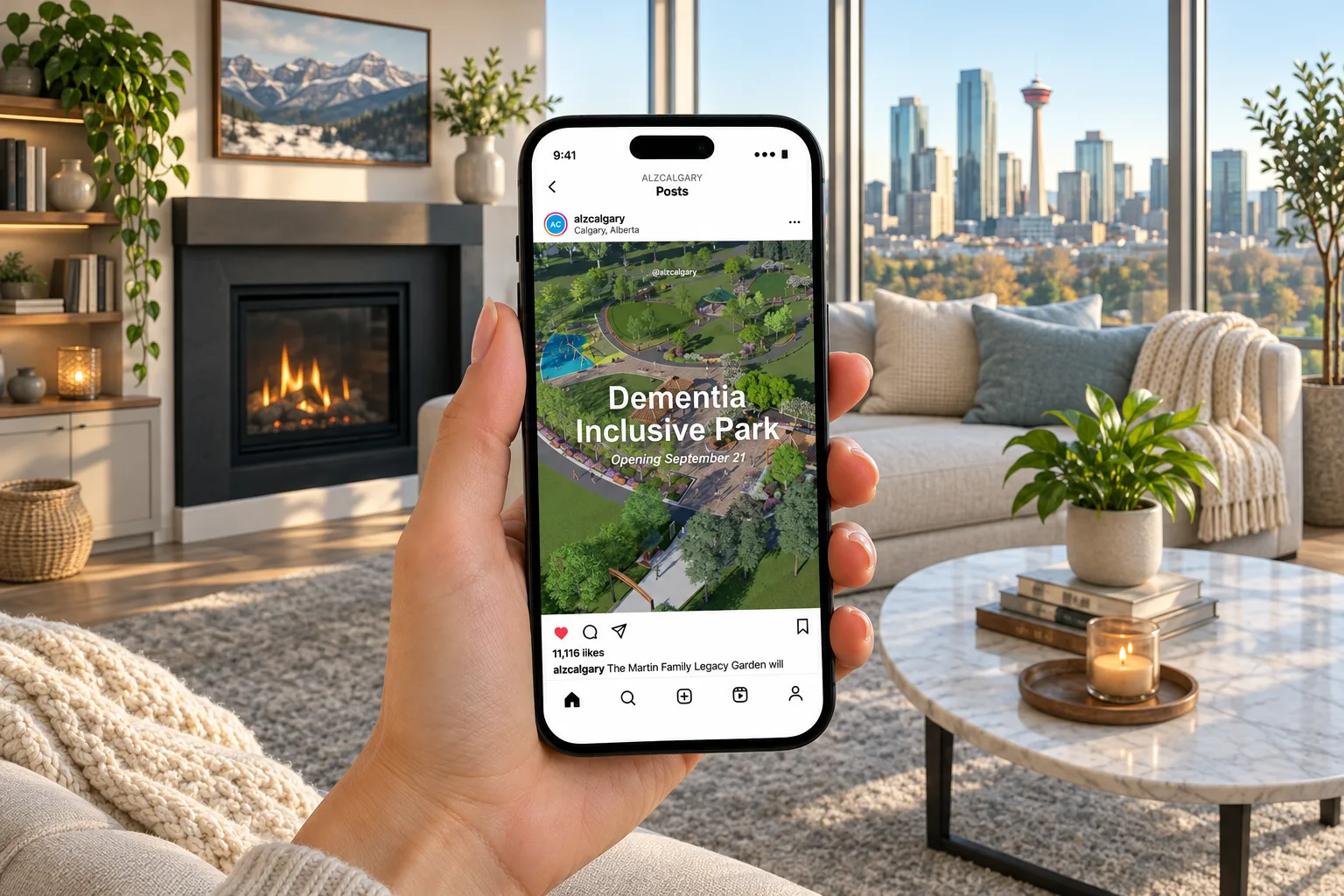
We do not treat this as a pile of separate assets. It runs as one system: a monthly on-site content shoot that builds a bank of real photography and video all year, a running series of short reels that carry the event's voice between big moments, and an Instagram grid built to read start to finish like a story rather than a scattered feed. Ambassador stories, like 2025's Jessica Barnes, get woven through the calendar so the campaign has a face and a name, not just a logo. Registration pushes are timed against the event's own milestones, from early bird pricing through to the staggered morning-of start, so the content always matches what a supporter actually needs to do next.
"These reels are AMAZING! I absolutely love them. The content we always dreamed of having!" Alzheimer Calgary
None of this looks like magic on the day. It looks like a shot list built weeks out, a run sheet for the morning of the event, and someone from our team literally strapping on a camera rig to run part of the course for runner point of view footage nobody else was capturing. Structure is what lets the creative take a risk on the day, because everyone already knows what "done" looks like.
The numbers backed up the feeling. Across the five-week campaign, the content and paid media reached more than 575,000 people and drew over 200,000 video views. Nearly 20,000 people visited the event website, and 787 of them completed their Walk and Run registration. On Instagram, the push brought 7,270 profile visits and 840 new followers to Alzheimer Calgary's page. Just as important to the partnership, the content gave the philanthropy team something they were genuinely proud to share internally and with their board, plus a library of photography and video they keep drawing on for StillMe and always-on content long after race day.
It would be easy to assume a community fundraiser gets a lighter version of a marketing plan than a corporate client, less strategy, fewer check-ins, a simpler content calendar. We do the opposite. Every dollar Alzheimer Calgary puts into this campaign has to compete with every other worthy cause asking for the same attention, which means the bar for the creative is not "good for a non-profit". It is good, full stop. That is the standard we hold every client to, corporate or community, because the audience scrolling past does not grade on a curve either.
The library this campaign builds does not retire once the runners cross the finish line. Photography and video from the Walk and Run get reworked into always-on content for StillMe, into recruitment posts for next year's volunteers, and into the kind of proof points a philanthropy team can point to when they are pitching a new corporate sponsor. A single well-planned shoot day, done right, keeps paying the organisation back for months.
Alzheimer Calgary has its own staff who know the community better than any outside agency ever will. Our job is not to replace that knowledge, it is to give it a system and a level of production polish that a busy internal team rarely has the hours to build on its own. The best partnerships we run look like this: their context and relationships, paired with our planning, shooting and editing capacity, aimed at the same goal.
Written by
John Biglete
Social Strategist x Creator
Plans, shoots and edits the reels, carousels and content days that give our clients' feeds a point of view.
+